illumination draws inspiration from the florals and motifs used in Guru Gobind Singh’s illuminated manuscript, dated between the late 17th century to early 18th century. It features Ek Oangkar in its centre, originally, in his own handwriting.
Guru Gobind Singh’s nishaan (signature) usually comprised of what appears to be a circle, a cross and Ek Oangkar Satguru. The circle representing the chakar (ring of iron) and/or shield, the cross representing Bhagauti, a sword.
A contemporary spin was taken on traditional motifs, by weaving different styles of art. A combination of watercolours, gold and black inks, were then digitally constructed. The Ek Oangkar was traced over by hand from the original illumination.
Original: Watercolours and ink on paper. Digital Painting. Hand finished with gold-pigment highlights.
Each piece is reproduced using Giclee print, on acid-free, non-reflective & archival quality fine art paper (310gsm). Hand finished with sun-gold pigments.
illumination draws inspiration from the florals and motifs used in Guru Gobind Singh’s illuminated manuscript, dated between the late 17th century to early 18th century. It features Ek Oangkar in its centre, originally, in his own handwriting.
Guru Gobind Singh’s nishaan (signature) usually comprised of what appears to be a circle, a cross and Ek Oangkar Satguru. The circle representing the chakar (ring of iron) and/or shield, the cross representing Bhagauti, a sword.
A contemporary spin was taken on traditional motifs, by weaving different styles of art. A combination of watercolours, gold and black inks, were then digitally constructed. The Ek Oangkar was traced over by hand from the original illumination.
Original: Watercolours and ink on paper. Digital Painting. Hand finished with gold-pigment highlights.
Each piece is reproduced using Giclee print, on acid-free, non-reflective & archival quality fine art paper (310gsm). Hand finished with sun-gold pigments.

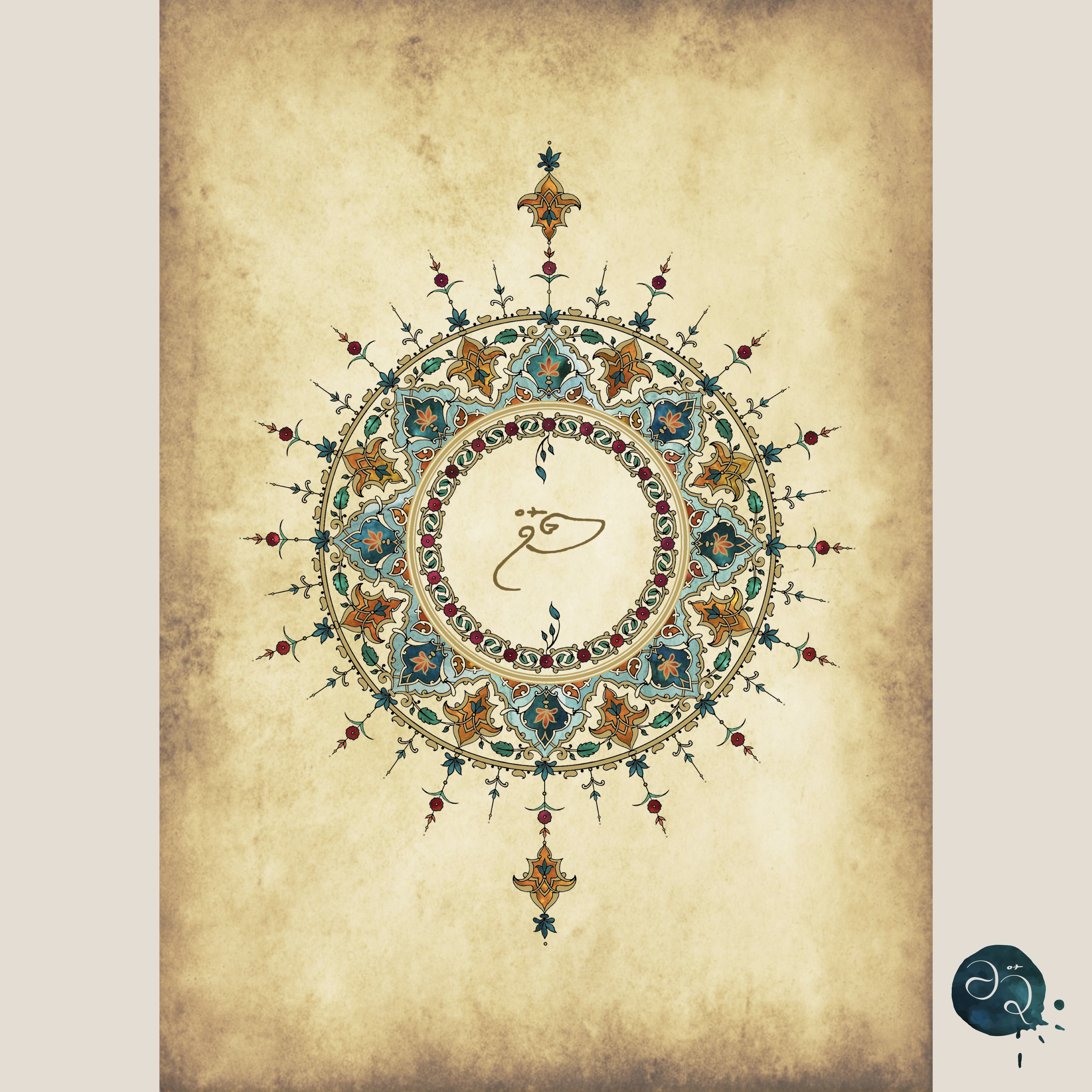 Image 1 of 8
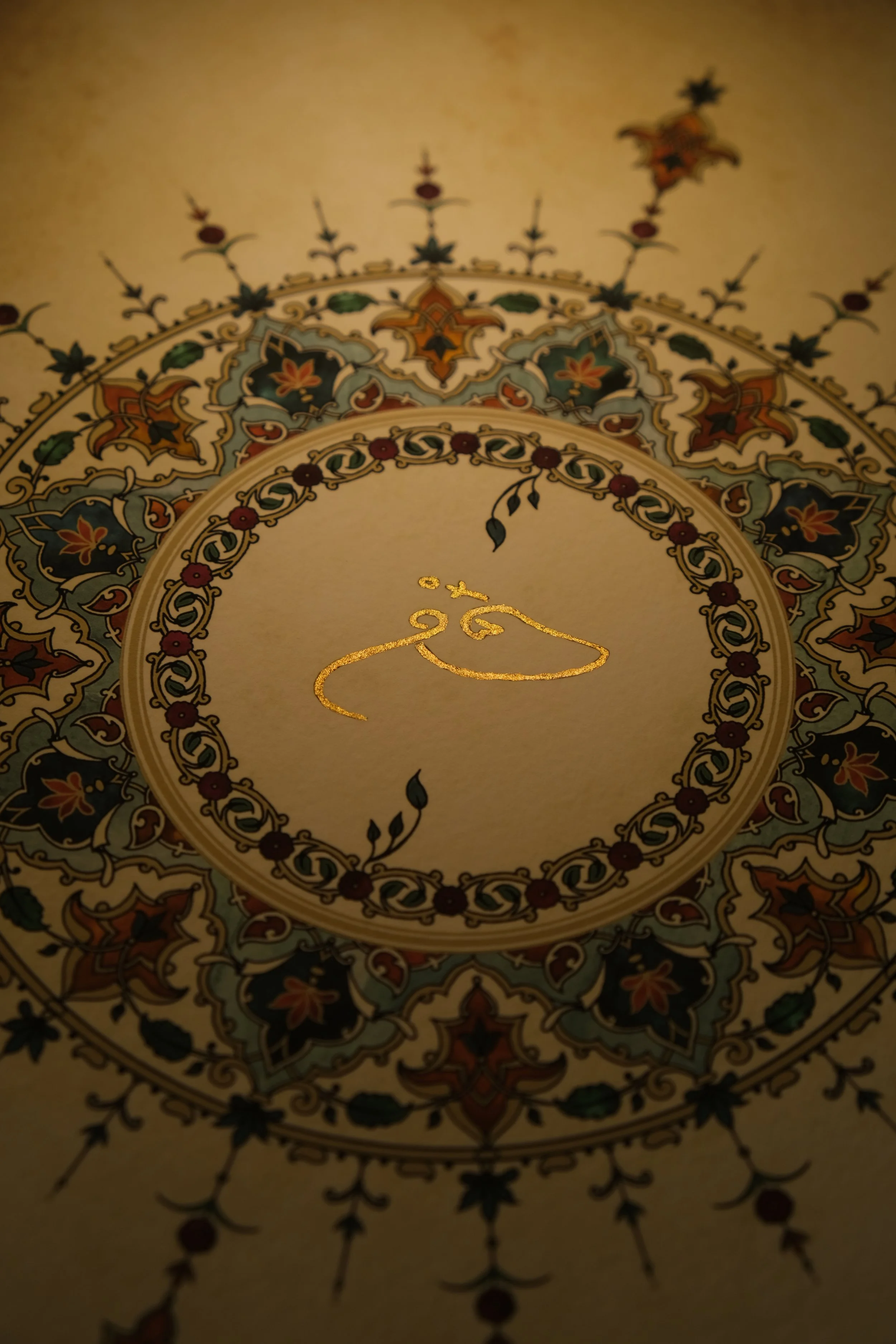 Image 2 of 8
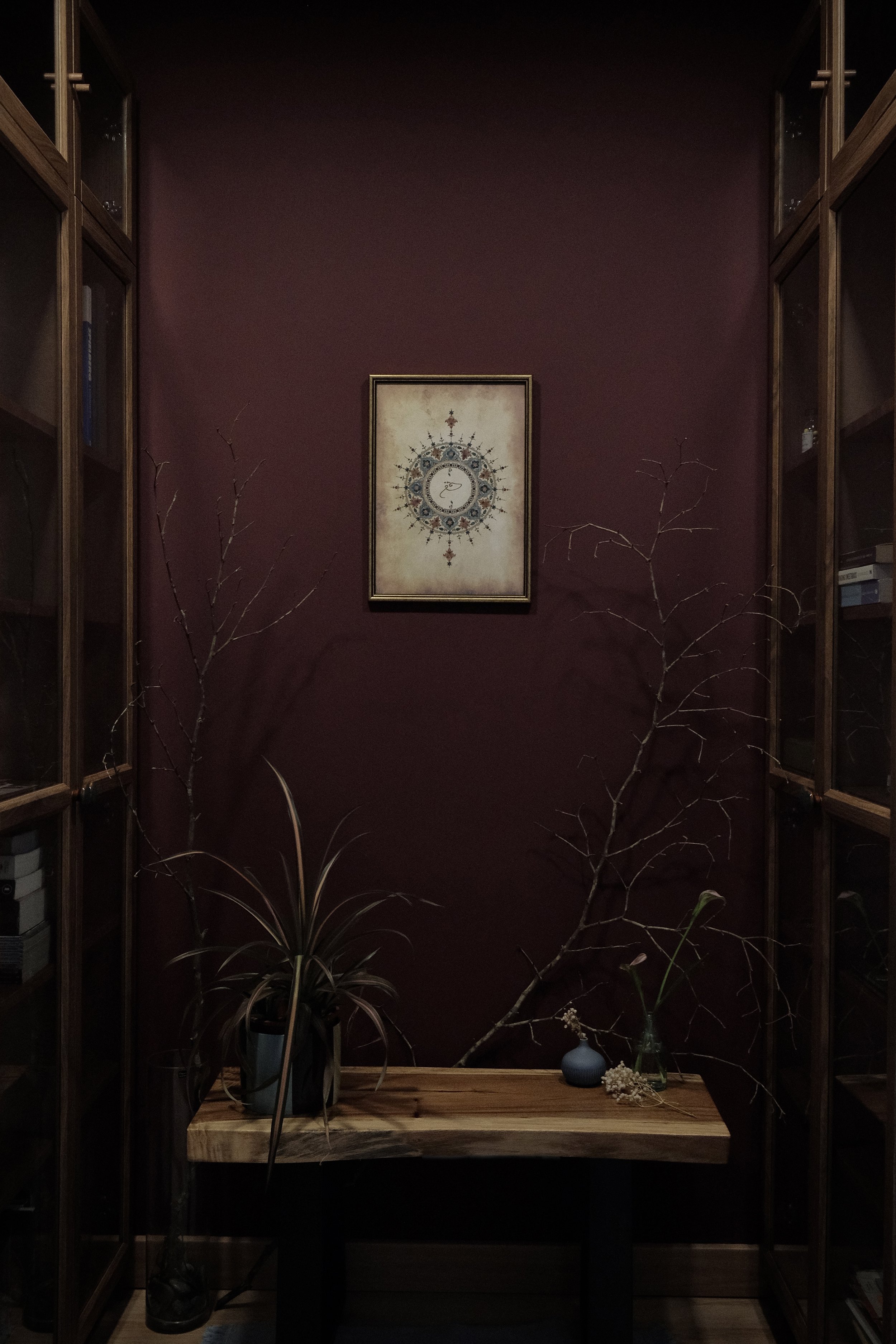 Image 3 of 8
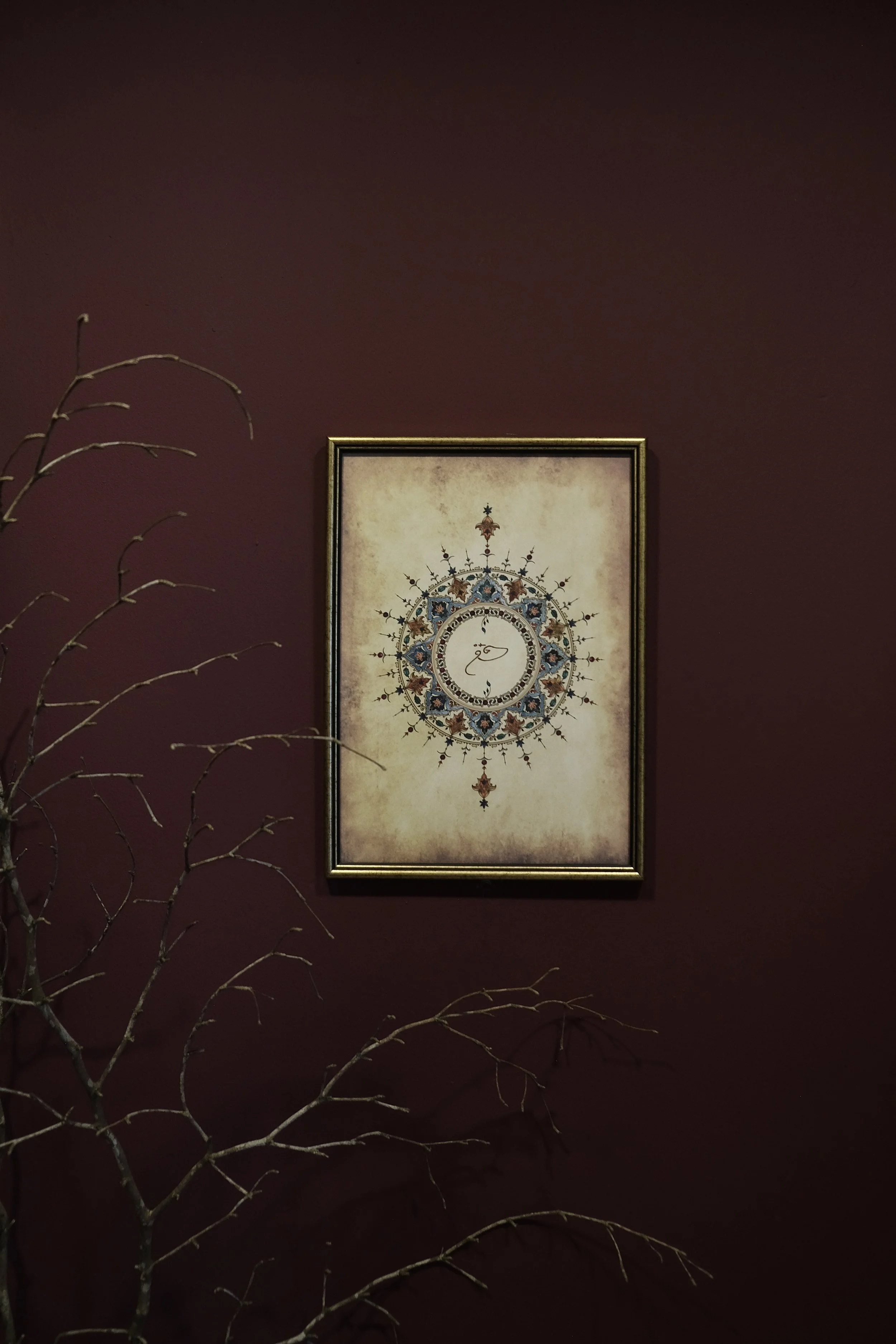 Image 4 of 8
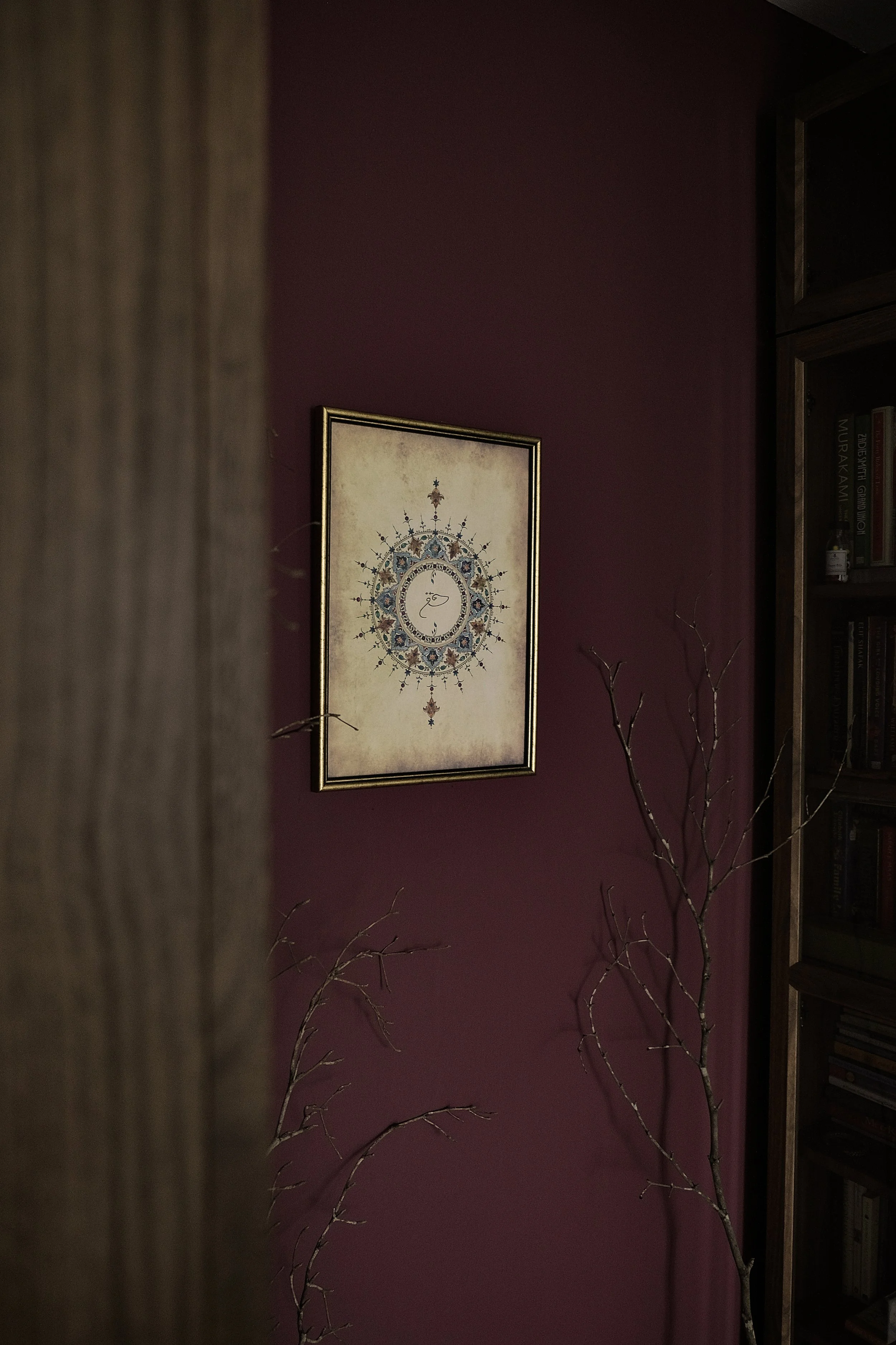 Image 5 of 8
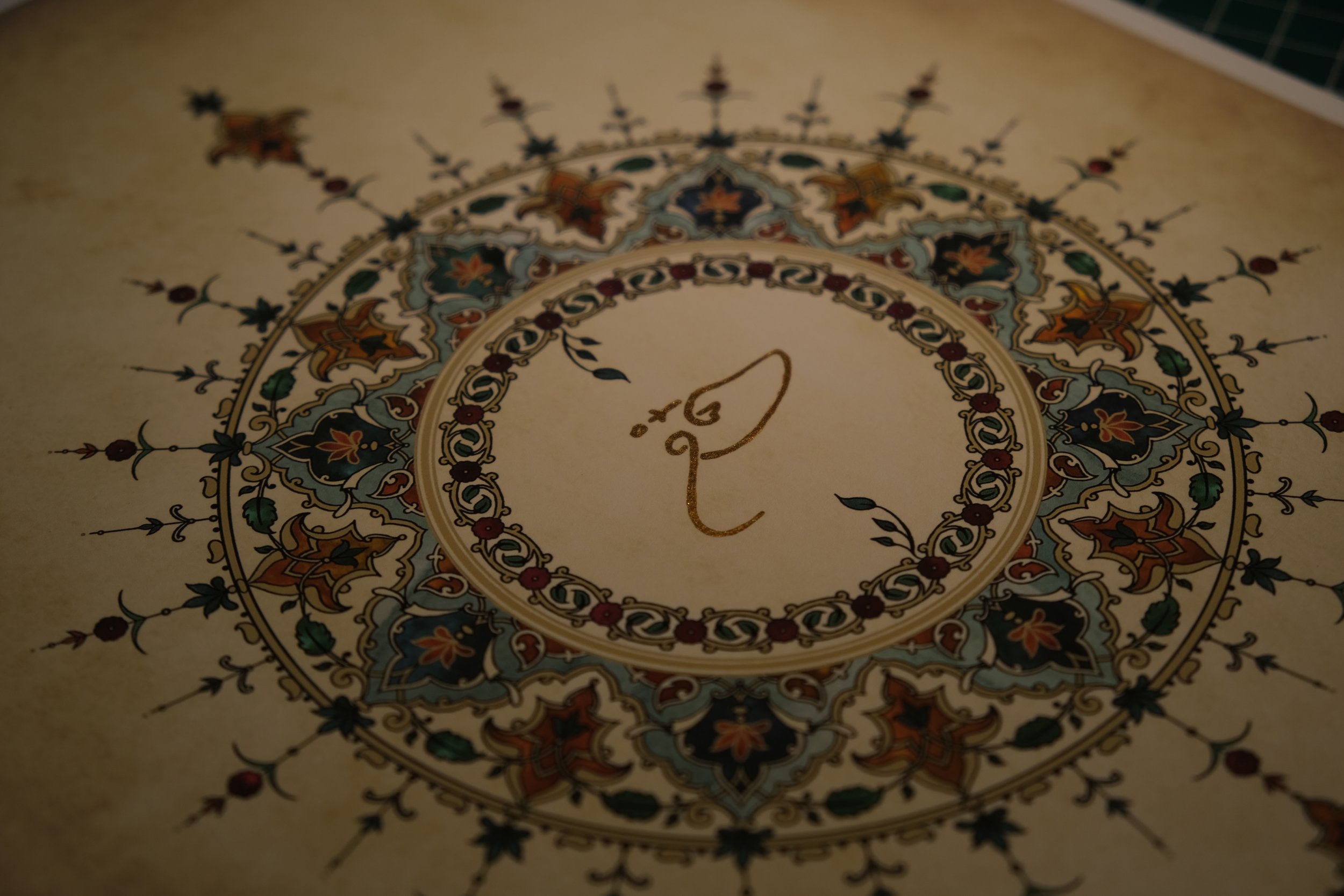 Image 6 of 8
 Image 7 of 8
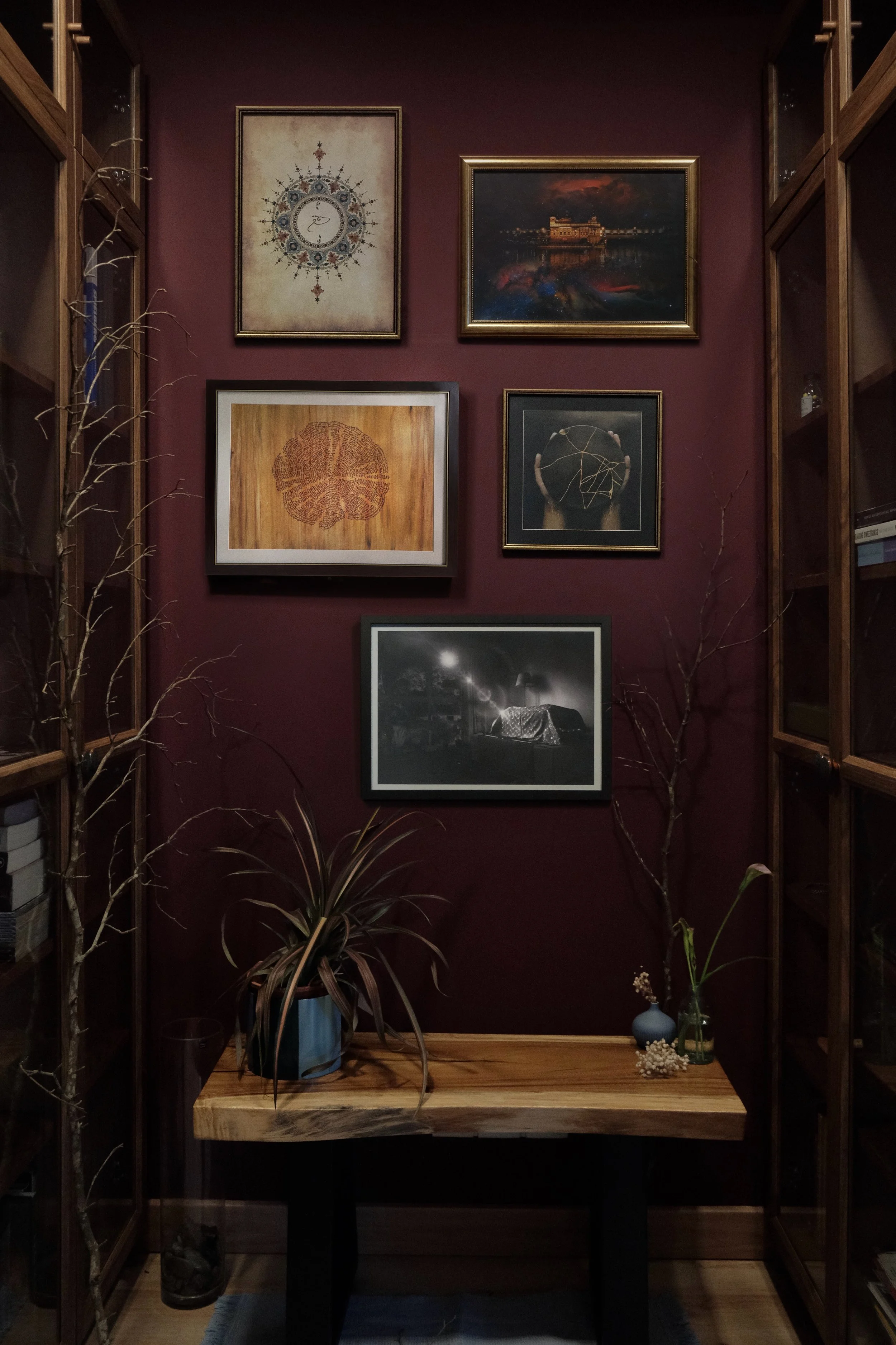 Image 8 of 8